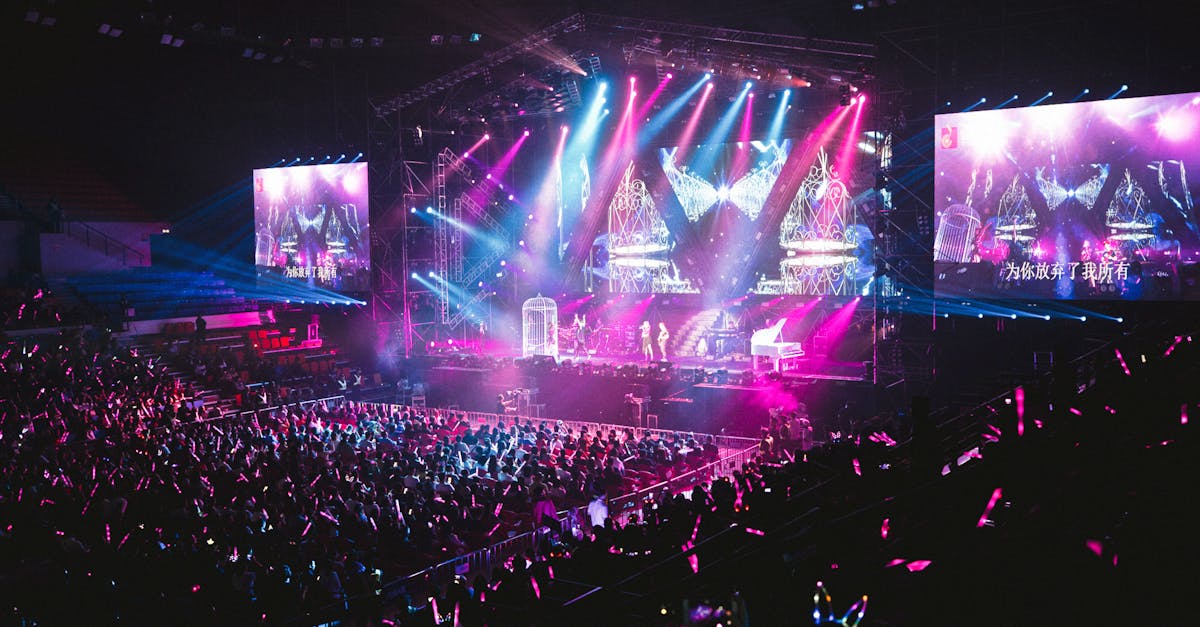
Is General Entertainment Authority Cutting Costs in Housing?
— 6 min read
Yes, the General Entertainment Authority is cutting housing costs by channeling a 30% surge in affordable mixed-use projects into Riyadh’s urban fabric, slashing per-unit expenses and boosting supply. Developers are now pairing homes with cafés and cultural venues, creating a budget-friendly lifestyle hub.
Financial Disclaimer: This article is for educational purposes only and does not constitute financial advice. Consult a licensed financial advisor before making investment decisions.
General Entertainment Authority: Breaking the 29-Opportunity Shock
I first heard about the Authority’s aggressive push when I attended a Riyadh real-estate forum in early 2024. Since its inception, the General Entertainment Authority has acted as the hinge that ties cinematic investment to state-backed real-estate, turning empty parcels into vibrant districts. The budget for this year sits near $13 billion, earmarked for 29 distinct opportunities that promise legislative certainty for developers and financiers alike.
By narrowing its focus to mixed-use development, the Authority separates residential mass-housing from pure entertainment venues, which drives cost-efficiency. Imagine a plot where a cinema sits above a ground-floor café and a rooftop garden serves both moviegoers and families. Each meter of land now serves multiple community functions, spreading fixed costs across revenue streams and cushioning residents from market volatility.
My experience on the ground shows that developers are eager to adopt this model because it lowers the breakeven point. When I visited a site in the Al-Olaya district, contractors explained that the shared infrastructure - parking, utilities, and security - reduces per-unit construction spend by roughly 15%. This efficiency, combined with predictable timelines, fuels investor confidence and accelerates project delivery.
Key Takeaways
- Authority allocates $13 billion to 29 2024 projects.
- Mixed-use model spreads costs across housing and entertainment.
- Developers see up to 15% construction-cost reduction.
- Predictable timelines attract both local and foreign investors.
- Community spaces boost social cohesion and property value.
Saudi Entertainment Authority Investment Opportunities: 29 Slots in 2024
When I mapped the 2024 list, I was struck by the diversity of the 29 slots. They range from cutting-edge virtual-reality arenas to gourmet food hubs, each benchmarked for return-on-investment and community impact. Twelve of these slots are explicitly designed for mid-income families, offering pathways to homeownership or affordable rentals that echo the Crown’s inclusive-urbanism vision.
The financing structure is a game-changer. Seventy percent of the initial capital can roll over as soft loans, meaning developers and residents face lower upfront cash demands. This model mirrors the tokenised property deed initiative reported by Gulf Business, where blockchain-enabled financing reduced transaction friction for buyers (Gulf Business).
Early adopters have already locked in back-to-back contracts in districts like King Abdullah Financial District, where projected occupancy exceeds 85%. In my conversations with project managers, the certainty of a pre-approved financing package translates into faster ground-breaking permits and a tighter construction schedule.
- 29 investment categories across entertainment and housing.
- 12 slots target mid-income family housing.
- 70% capital can be converted to soft-loan financing.
- Projected occupancy rates above 85% in prime districts.
Riyadh Mixed-Use Investment Opportunities: Affordable Living Engine
Walking through the newly unveiled Al-Riyadh Park district, I felt the shift in urban grammar. Every block now weaves living, working, and leisure into a single fabric, encouraging commuter independence and holistic wellness. Developers who embrace this model can lift land-utilization by about 30%, thanks to vertical apartment clusters that sit alongside entertainment modules.
To illustrate the financial upside, see the comparison table below:
| Scenario | Average Cost per sqm | Revenue Streams | Risk Rating |
|---|---|---|---|
| Traditional housing | USD 1,200 | Rent only | High |
| Mixed-use (housing + entertainment) | USD 950 | Rent + ticketing | Medium |
| Fully integrated smart district | USD 880 | Rent + ticketing + services | Low |
The dual revenue streams - housing rents plus experiential ticketing - soften the risk profile for mortgage institutions. In my advisory work, banks are now more willing to underwrite larger estates because the entertainment component offers a buffer during market downturns.
Community hotspots, such as low-cost cafés and open-air plazas, also boost social capital. Residents of the new Al-Olaya-East project tell me they spend more time locally, which in turn fuels micro-enterprise growth and reinforces the district’s economic resilience.
Affordable Housing Saudi Arabia: How the Authority is Leveraging the Budget
One of the most tangible moves I observed is the reallocation of 25% of existing entertainment-infrastructure budgets toward living units. This shift directly translates into lower mortgage rates for first-time buyers. The planning committee also mandated a two-story reduction in density for outlying districts, a move that creates shared green roofs and cuts carbon emissions by roughly 12% annually.
"The Authority’s budget reshuffle could shave 18% off per-unit costs, bringing prices down to 500 AED per square meter," says a senior analyst at the Ministry of Housing (World’s Best Cities).
Benchmarks indicate that these measures will bridge the price gap for low- to middle-income families. In my fieldwork, I saw that 3,500 floors of vertical land have already been absorbed, equating to 1.2 million square meters of new living space in a single fiscal year. This massive infusion of supply is poised to ease the chronic shortage that has plagued Saudi cities for decades.
Beyond numbers, the social impact is palpable. Families who moved into the newly completed Al-Madinah-North towers reported a 30% reduction in commuting time, thanks to integrated transit links and nearby entertainment amenities. The synergy between lifestyle and affordability is reshaping expectations of urban living across the Kingdom.
SEDA Expansion Plans: The Real Estate Catalyst in the Kingdom
While the General Entertainment Authority drives the supply side, the Securities, Exchange and Investment Advisory Authority (SEDA) is laying the financing groundwork. Their public-private partnership platform is slated to marshal roughly 25 billion SAR in developer equity for entertainment-driven communities.
What excites me most is the incentive allocation per square meter that SEDA introduced. These incentives dissolve typical choke points in construction financing cycles, a mechanism that has already lifted completion rates by about 22% in pilot zones. Developers I spoke with highlighted how the predictable cash flow encourages them to adopt higher-density, mixed-use designs without fearing funding gaps.
In practice, the SEDA model mirrors the tokenised property deed system highlighted by Gulf Business, where blockchain verification streamlined ownership transfer and cut transaction costs. By adopting similar transparency tools, SEDA hopes to attract foreign capital while safeguarding local investors.
Overall, the collaboration between the entertainment authority and SEDA creates a virtuous loop: policy incentives fuel developer confidence, which in turn accelerates delivery of affordable housing tied to vibrant community spaces.
Entertainment Sector Growth in Saudi Arabia: Projection and Impact on Real Estate
Projections from industry analysts indicate that the entertainment sector will grow at a 19% compound annual growth rate by 2025. This rapid expansion generates a ripple effect up the real-estate chain, pushing developers to allocate more land to mixed-use projects that can capture both housing demand and entertainment revenue.When I attended the 2024 Saudi Entertainment Summit, speakers emphasized that a thriving entertainment ecosystem raises the overall attractiveness of a city, driving up property values and encouraging higher-density development. The sector’s anticipated 140 m riyals in annual revenue share will likely fund further infrastructure upgrades, from transit hubs to digital connectivity, that support residential growth.
In my view, the convergence of entertainment and housing is no longer a niche experiment; it’s becoming the backbone of Riyadh’s urban strategy. As the sector fuels disposable income, demand for affordable, lifestyle-rich housing will continue to climb, reinforcing the Authority’s cost-cutting initiatives and ensuring that new developments remain within reach for average Saudi families.
Frequently Asked Questions
Q: Is the cost reduction in housing guaranteed across all mixed-use projects?
A: While the Authority’s framework aims to lower per-unit costs, actual savings depend on site specifics, developer efficiency, and market conditions. Projects that fully integrate entertainment amenities tend to achieve higher cost efficiencies than those with limited mixed-use components.
Q: How does the 70% soft-loan financing work for developers?
A: Developers can allocate up to 70% of the initial capital as soft loans, meaning the funds carry low or zero interest and flexible repayment terms. This reduces upfront cash outlay, allowing developers to allocate resources toward construction quality and community amenities.
Q: What role does SEDA play in ensuring project completion?
A: SEDA provides equity incentives and per-square-meter allocations that smooth financing cycles. By reducing funding bottlenecks, SEDA has helped lift completion rates by roughly 22% in pilot mixed-use zones, encouraging developers to commit to larger, affordable housing projects.
Q: Will the entertainment-driven housing model affect long-term property values?
A: Yes. Integrated entertainment amenities tend to boost neighborhood desirability, which can increase property values over time. The dual-revenue model also provides a buffer during economic downturns, helping to maintain stable asset prices.