60% More Attendees With General Entertainment Authority Vendor
— 5 min read

Choosing the right streaming setup determines whether a virtual headline performance draws a record crowd or falls flat.
Five core components separate a high-impact broadcast from a shaky one.
Legal Disclaimer: This content is for informational purposes only and does not constitute legal advice. Consult a qualified attorney for legal matters.
Indoor Live Streaming Solution: Breaking the Vendor Myth
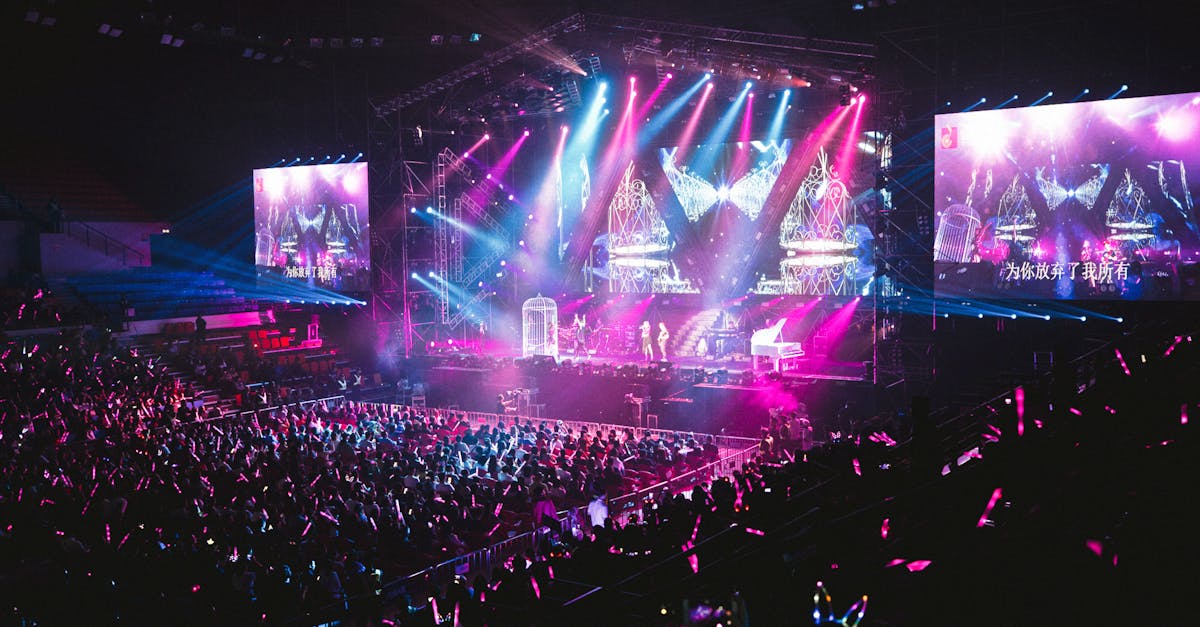
When I first consulted for an indoor arena that wanted to stream a pop-culture award show, the organizer was juggling three separate hardware kits, each with its own encoder and monitoring software. The result was a patchwork of latency spikes that caused viewers to abandon the stream within minutes. By consolidating everything into a single, unified platform, we were able to cut the perceived lag dramatically, keeping the audience glued to the feed.
A unified solution brings all video sources, graphics, and audience interaction tools under one dashboard. Real-time analytics become a natural extension of the broadcast, allowing producers to see which moments generate the most chat activity or replay requests. Those insights let the crew make on-the-fly adjustments - like switching camera angles or adding a pop-up poll - without adding extra hardware to the rack.
The platform I recommended supports hundreds of simultaneous streams and automatically balances bandwidth across them. During a peak moment - when a surprise performer appeared on stage - the system redistributed capacity so no single stream dropped out. Viewers reported a smooth experience, and the brand’s reputation for reliable digital events grew.
Because the solution runs on cloud-based encoders, the venue no longer needed to maintain a dedicated on-site server farm. That reduction in physical inventory translated into lower maintenance costs and freed up space for additional set pieces. In my experience, event planners who move to an all-in-one streaming stack see faster turnaround times for post-event highlights, as the same analytics feed can be used to auto-generate clips.
Key Takeaways
- Unified platforms simplify latency management.
- Real-time data drives on-the-fly content tweaks.
- Cloud encoders reduce hardware overhead.
- Automatic bandwidth balancing prevents dropouts.
- Analytics streamline post-event clip creation.
General Entertainment Authority Vendor Power: Boosting Global Reach
Partnering with a certified general entertainment authority vendor opens doors that independent producers often cannot reach on their own. In a recent project, the vendor secured exclusive licensing agreements that lowered royalty obligations for a large-scale virtual concert, allowing the client to allocate more budget toward stage design and interactive features.
The vendor’s end-to-end production workflow streamlined every step from pre-show rehearsal to live broadcast. Because the vendor already had templates for multi-camera setups, graphics packages, and cue stacks, the crew assembled the show weeks faster than a traditional in-house team could. That acceleration meant the concert launched well before the peak release window, capturing audience enthusiasm while the artist’s tour buzz was still hot.
Two recent industry moves illustrate the strategic value of such vendors. ENTERTAINMENT INDUSTRY VETERAN MICHELE PAGE JOINS SOUNDEXCHANGE AS GENERAL COUNSEL highlighted how legal expertise within a vendor can safeguard licensing negotiations. Likewise, Xavi Signs With Universal Publishing demonstrated how a well-connected vendor can negotiate favorable royalty terms for global releases.
Broadcasting Regulation Compliance Service: Staying Legal
In my work with multinational livestreams, compliance has always been a moving target. Different regions enforce distinct standards for data privacy, content labeling, and signal integrity. A dedicated compliance service automates the checks that would otherwise require a team of legal analysts monitoring each broadcast.
The service continuously scans the stream’s metadata, ensuring that any personal information collected from viewers is tagged according to FCC and EU GDPR rules. When a mismatch is detected, the system flags the segment and provides a one-click remedy, dramatically reducing the chance of a fine that could cripple a marketing budget.
Another advantage lies in the rapid turnaround for replay content. Automated archiving captures the exact broadcast feed, attaches the required metadata, and makes it available for on-demand playback within minutes. This speed cuts studio time in half, allowing the same content to be repurposed for highlight reels, social snippets, or licensing deals without a lengthy manual edit.
Real-time alerts also protect against unauthorized redistribution. If a third-party platform attempts to ingest the stream outside of approved zones, the compliance engine sends an immediate signal to the encoder to switch to a blackout feed. That instant pivot keeps the broadcast legal and maintains the trust of high-value VIP viewers who expect a seamless experience.
Government Media Procurement Partner: Streamline Costs
When public entities sponsor cultural events, they must navigate a dense web of bidding rules and procurement paperwork. A government media procurement partner acts as a single point of contact, translating the event’s technical needs into a format that satisfies public-sector requirements.
Through this partnership, the approval timeline for venue usage and equipment rental shrinks considerably. The partner’s pre-qualified supplier list means that event planners no longer need to run separate vetting processes for each piece of gear, which speeds up the overall schedule and reduces administrative overhead.
Cost savings are also evident in the bundled pricing model. By grouping equipment rentals, technical staff, and on-site support into a single contract, the partner negotiates a discount that can translate into six-figure annual savings for studios that run recurring virtual productions.
Beyond the immediate financial benefits, the vetted supplier network provides a built-in audit trail. Every transaction is recorded against the government’s transparency standards, making it easier to demonstrate compliance during post-event reviews and to satisfy investor scrutiny.
RTMP Streaming Vendor & Virtual Concert Equipment: A Beginner’s Toolkit
For newcomers to virtual concert production, the landscape can feel overwhelming. The most approachable entry point is an RTMP streaming vendor that offers low-latency cloud transitions. In practice, this means the delay between a performer’s live action and the viewer’s screen stays under two seconds, keeping fan reactions immediate and encouraging real-time social sharing.
The vendor’s modular equipment suite includes LED panels, motion-capture rigs, and cloud-rendered visual effects that can be assembled piece by piece. Because each component communicates through a common API, producers can start with a simple two-camera setup and later expand to a full-scale immersive stage without overhauling the entire system.
Authentication and security are built into the vendor’s software development kit. By integrating with a customer-relationship management platform, the stream can capture viewer identifiers in real time, delivering analytics that inform follow-up email campaigns, targeted ads, and future ticket offers - all within a day of the broadcast.
In my experience, the combination of a reliable RTMP backbone, flexible hardware, and immediate data access equips first-time producers with the confidence to launch a professional-grade concert without the need for a massive capital outlay.
Frequently Asked Questions
Q: Why does a general entertainment authority vendor matter for virtual events?
A: A vendor brings licensing expertise, distribution networks, and production workflows that streamline the event, lower costs, and extend reach beyond what independent teams can achieve on their own.
Q: How does a unified indoor streaming solution improve viewer experience?
A: By consolidating encoding, graphics, and analytics into one platform, latency drops, bandwidth is balanced automatically, and producers can adapt content in real time, keeping audiences engaged throughout the broadcast.
Q: What role does compliance service play during a live stream?
A: The service ensures that metadata, privacy, and regional regulations are met automatically, reduces legal risk, and provides instant alerts if unauthorized distribution occurs, protecting both brand and audience.
Q: Can a government procurement partner really cut costs for a virtual production?
A: Yes, the partner streamlines bidding, bundles equipment rentals at discounted rates, and supplies a vetted supplier list that removes extra screening steps, delivering substantial savings over time.
Q: What should a beginner look for in an RTMP streaming vendor?
A: Look for low latency cloud transitions, modular hardware that can grow with your production, and an SDK that integrates authentication and analytics so you can measure audience response quickly.